The olive tree is not only decorative. With proper care, it is a long-lived, resilient plant that over time can produce flowers and even fruit. We show you how to choose the right specimen and how to care for it all year round.
Why choose an olive tree?
The European olive tree (Olea europaea) is an evergreen plant, so it decorates with its leaves even in winter. When young, it is clean and elegant, while older specimens stand out from their surroundings as true Mediterranean visual elements with their gnarled trunks.
Benefits of the olive tree:
Spectacular and timeless: looks great in modern, rustic, and Mediterranean environments alike.
Can be grown in pots: ideal for terraces, balconies, and next to entrances.
Easily shaped: with pruning, you can create a compact crown or even a tree-like form.
Relatively drought-tolerant: an already rooted plant tolerates shorter dry periods well.
Long-lived: under suitable conditions, it can be the defining plant of the garden or terrace for many years.
Where should the olive tree be placed?
For the olive tree, sunlight is the most important. Choose a spot where it gets at least 6 hours of direct sunlight a day. The brighter and warmer the location, the denser its foliage can be, and the higher the chances of flowering and fruiting.
The other key factor is good drainage. The olive tree does not like its roots sitting permanently in a moist medium. In the case of compact, clay soil, it is therefore advisable to create a looser, well-draining planting medium.
For potted growing, choose:
a pot with a drainage hole at the bottom;
a loose, well-draining planting medium;
a stable container suitable for the plant's size;
a sunny, wind-protected location.
Tip: An overly large pot is not always advantageous, as a large amount of soil dries out more slowly. When repotting, increase the container size gradually.
Watering the olive tree: less often, but thoroughly
The olive tree has a reputation for being drought-tolerant, but this applies primarily to already established, open-ground specimens. Freshly planted and potted trees must be checked regularly.
Before watering, check the top few centimeters of the soil. If it has already dried out, water the plant thoroughly, then let the excess water drain away. Stagnant water should not remain in the pot saucer or closed planter, as this can lead to root rot.
The best method is not a strict watering schedule, but monitoring the condition of the soil. The plant's water needs depend on:
the season and temperature;
the size and material of the pot;
the size of the plant;
the strength of the wind and sunshine;
the water-retaining capacity of the soil.
In summer, a potted olive tree may ask for water more often, but in winter it needs much less.
Nutrient replenishment for beautiful foliage and fruit
Appropriate nutrients provided during the growing season can help healthy shoots, flowering, and fruit development. In spring, you can use a balanced, slow-release fertilizer or a nutrient solution made for fruiting plants, applied according to the manufacturer's dosage.
Over-fertilizing, however, does not infinitely speed up growth. Too much nitrogen can cause soft, vulnerable shoots and excessive foliage growth. Always follow the dosage instructions of the chosen product, and do not stimulate the tree for intense growth in autumn.
Pruning: a more shapely crown, a healthier plant
The olive tree tolerates pruning well. The best time is usually early spring, after the severe frosts have passed.
First, remove:
dried or damaged branches;
crossing shoots;
branches growing towards the inside of the crown;
suckers appearing at the base of the trunk;
shoots that are too long and stick out of shape.
A sparser, more airy crown receives more light and is more easily penetrated by air. This is not only an aesthetic advantage: the fruit of the olive tree is typically linked to newer shoots, so proper pruning can also support fruiting capacity.
However, do not cut an unreasonably large amount off the plant at once. The goal is a proportionate, bright crown, not the drastic truncation of the tree.
Can the olive tree survive the winter?
The olive tree tolerates cold to some extent, but persistent frost, icy wind, and winter dampness can pose a serious risk. Young, freshly planted, and potted specimens are particularly sensitive.
It is advisable to overwinter a potted olive tree in a bright, cool, but frost-free place. This could be a bright staircase, porch, conservatory, or frost-free outbuilding. Water it less often in winter, but do not let the root ball dry out completely.
For an open-ground olive tree:
choose a sunny, protected location;
ensure excellent drainage;
cover the root zone with mulch;
use breathable winter covering for young plants;
avoid a permanently wet medium around the trunk.
Cold tolerance also depends on the variety, age, length of frost, and location. Some care guides mention frost tolerance down to about -10°C, but it is not worth considering this a safe limit valid for every plant.
When does the olive tree bear fruit?
An olive tree grown under proper conditions can begin to bear fruit after a few years, but the exact time also depends on the variety, plant age, amount of light, and wintering. According to some grower experiences, minor fruiting can appear around the third year after planting, and more serious fruiting is expected around the fifth year.
Successful fruiting generally requires:
plenty of direct sunlight;
appropriate variety and plant age;
balanced nutrient supply;
professional pruning;
favorable flowering and pollination conditions.
It is important that olives picked from the tree are not directly consumable: due to their bitterness, they require processing, such as curing or other professional treatment.
Common problems and their solutions
Yellowing, falling leaves: Overwatering, poor drainage, or lack of light might be the cause. Let the soil dry, check drainage, and move to a sunnier spot.
Drooping leaves: Lack of water or damaged, overly wet roots can cause this. Check soil moisture, do not water automatically.
No flowers or fruit: Lack of sunlight, a young plant, or improper wintering is the reason. Provide more sunlight and give the plant time.
Brown leaf tips: Develops due to drying out, cold wind, or salt accumulation. Check watering, protect the plant, and occasionally flush the soil.
Sticky leaves, tiny pests: Indicates the presence of scale insects, whiteflies, or other sucking pests. Isolate the plant and apply targeted plant protection treatment.
Soft, foul-smelling roots: A sign of root rot caused by stagnant water. Remove diseased roots and transplant into a loose, fresh medium.
Olive tree care calendar
Spring: Repotting, pruning, gradual acclimatization outdoors, nutrient replenishment.
Summer: Regular moisture checks, thorough watering, monitoring for pests.
Autumn: Reducing nutrient supply, preparing the wintering location, harvesting fruit.
Winter: Frost protection, bright wintering, moderate watering.
Which olive tree suits you?
When choosing, don't just look at the current size. Consider where the plant will stand, how much light it will get, how it can be overwintered, and whether you want to shape it regularly.
Smaller, young olive tree: a good choice for a balcony, small terrace, or as a gift.
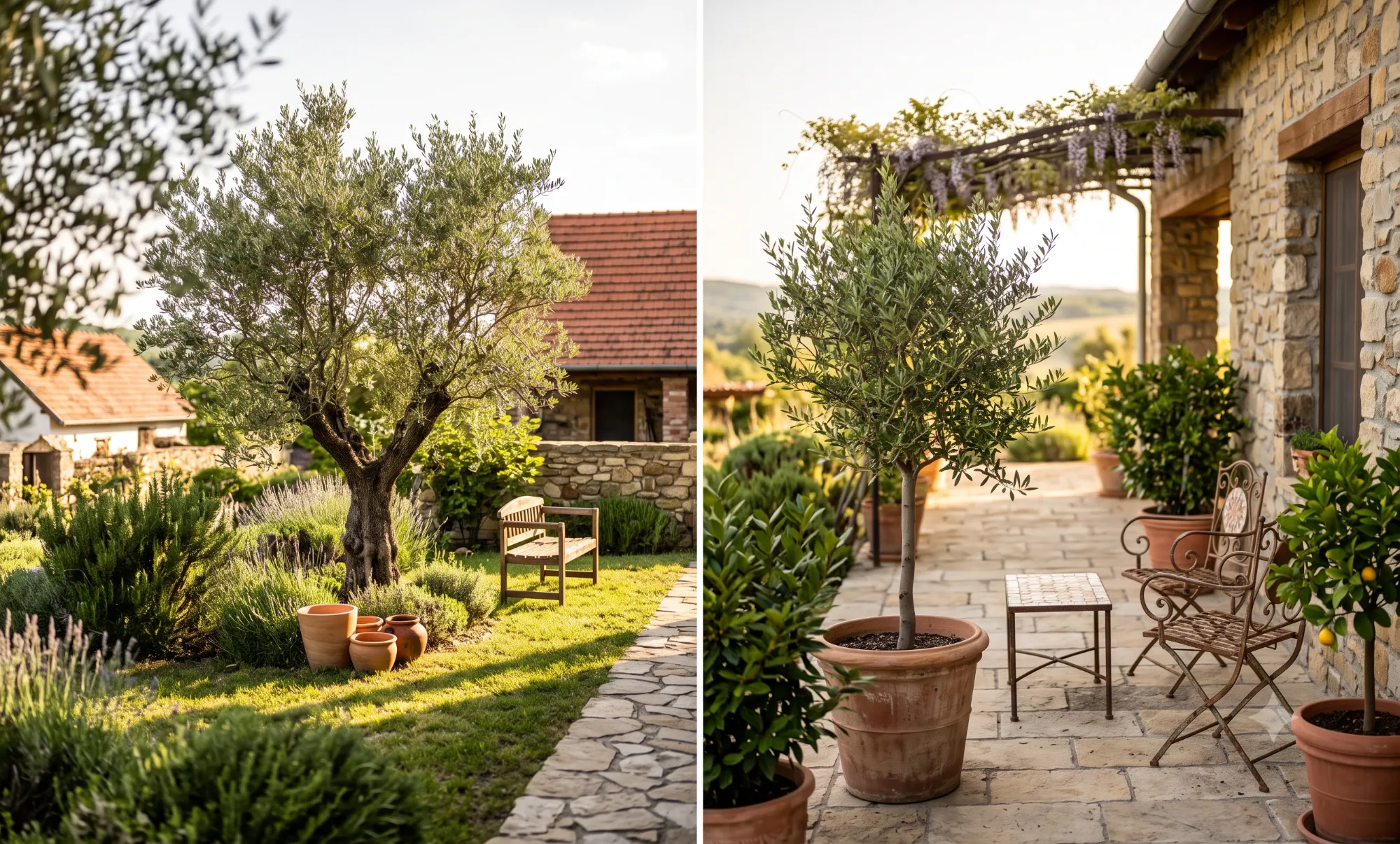
Standard (tree-form) olive tree: an elegant, tidy-looking plant for next to entrances and seating areas.
Larger, older specimen: an immediate visual element for a spacious terrace or a representative garden.
Characterful, gnarled trunk tree: for those looking for a true Mediterranean centerpiece.
You can further enhance the desired atmosphere with the right pot. Terracotta gives a natural, southern character, while a clean anthracite or light pot highlights the silvery foliage in a modern setting.
A piece of the Mediterranean at home
The olive tree is not just another potted plant. It brings atmosphere, character, and timeless beauty to the space. In a sunny spot, in a well-draining medium, and with proper winter protection, it can be one of your home's most beautiful ornaments for a long time.
Choose the olive tree that suits your garden or terrace, place it in a sunny spot, and create a Mediterranean seating area with a few well-chosen accessories. A characterful pot, some lavender, and a comfortable seat are enough to bring the holiday vibe a little closer every day.